When the final school bell rang on June 2, echoing through the halls of Darby Woods Elementary School to signal the start of summer vacation, the learning may have officially paused for most students, but for teacher Kara Crowley, the end of the school year was merely the beginning of an entirely different kind of educational adventure. For Crowley, the learning moved millions of years into the past when she traded her whiteboard markers and lesson plans for brushes, chisels, and the dusty terrain of an active paleontological dig.
Unearthing History
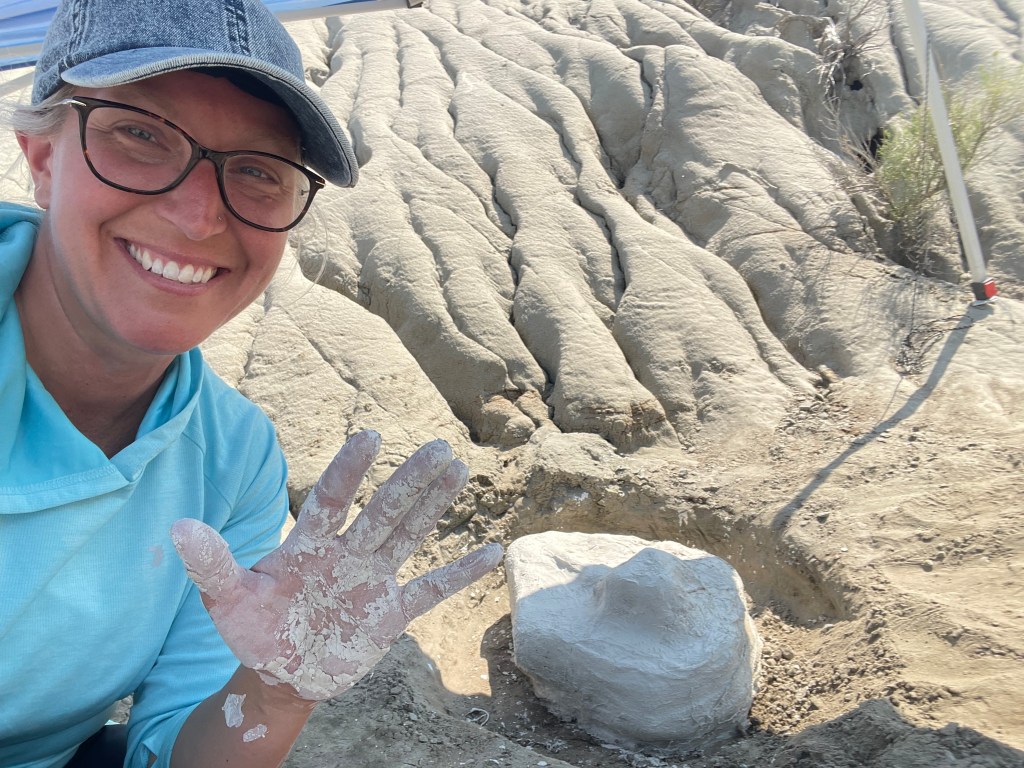
As a second-grade teacher, Crowley spends her days helping young minds discover the world around them. So, taking a page out of the books in her classroom that bring the discovery of history and the world around her students to life, this summer, she decided to take that passion to the next level by volunteering at a dinosaur fossil excavation site through the Burke Museum’s Discoveries in Geosciences (DIG) Field Schools and Workshops program for educators – making this her second trip with the program after completing her first visit in 2017. Following her acceptance to the program through a competitive application process, Crowley returned this summer to the site for more hands-on learning to bring back to her classroom.
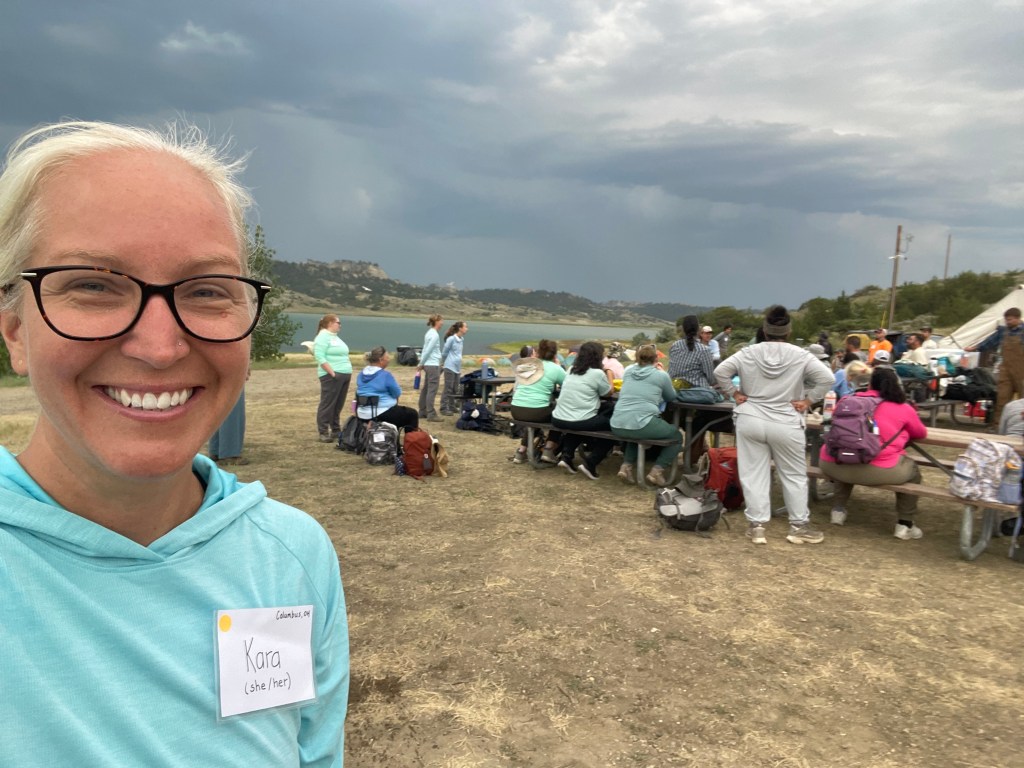
The DIG Field School, which takes place each summer, is a five-day, hands-on introduction to paleontology and geology offered to K–12 teachers. Participants in the program work side-by-side with leading researchers in paleontology and geology who work for world-class institutions and receive hands-on training in field collecting and research techniques, including collecting dinosaurs and other fossils.
“When I went out as a teacher in 2017, I was actually one of the teachers that got to see the Tufts Love T-Rex Skull, which is the most intact T-Rex in the world,” said Crowley. “I just learned so much about geology and paleontology being with some of the best paleontologists in the world and I had always wanted to go back after 2017.”
After flying into Billings, Montana, Crowley and the rest of this year’s educational invitees took about a four hour drive to a remote destination to access the dig site where their days were characterized by 6:00 a.m. wake-ups, hot days (above 100 degrees fahrenheit) temperature wise, and concluding around the campfire around 11:00 p.m.
Throughout her work alongside experienced paleontologists, Crowley spent her days meticulously clearing away sediment to reveal the fossilized remains of prehistoric giants. She was lucky from the start, as on Day 1, Crowley found prehistoric gar scales, turtles shells, crocodile teeth, and a sting ray tooth some 66,000,000 years old!
The process requires immense patience, precision, and a delicate touch – skills that any veteran elementary school teacher has already mastered.
Bringing the Jurassic back to DWES
The impact of Crowley’s summer extends far beyond the excavation site. As the new school year approaches this week, she is already preparing lessons for ways to weave her hands-on experience into her students’ learning through the use of “DIG Boxes” she is setting up to visit at Darby Woods Elementary School.
“The Burke Museum offers these learning kits called DIG Boxes and they will send them to you for free if you go to the dig school,” said Crowley. “[Classrooms] just log into their website and they’ll send you a DIG Boxes, which includes a bunch of different kinds of micro fossils. I love just talking to the kids about science, scientists, and what they’re doing out in the field.”
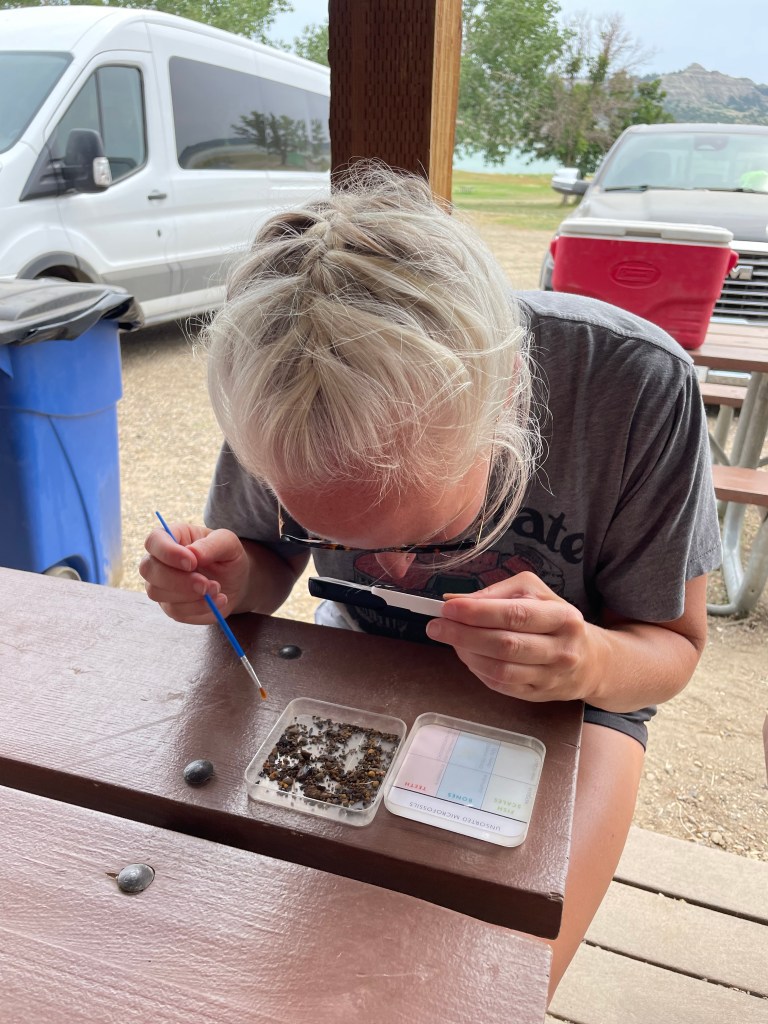
Beyond DIG Boxes, Crowley plans to use her field notes, photographs of the excavation, and stories of teamwork at the dig site to bring her science lessons to life for her second graders – a passion first instilled in her from her former third grade teacher when she was growing up.
“Her name was Mrs. Mermer and I ended up having her again in 5th grade,” said Crowley. “I just remember on Fridays that she would take us out to pick up trash on the playground and she always just cared about the environment. I don’t remember any, significant science lesson that launched my interest, but her passion for science was just always woven into what we did and what we cared about.”
“She just had a love for the environment, science, conservation efforts and recycling. I remember hearing about the recitation of ‘reduce, reuse, recycle’ for the first time through her, and I just loved that experience with her. She cared so much about the world and I wanted to care about it too. I just wanted to learn more and do more and she always was the same way.”
Crowley’s second graders this year won’t just be walking into a standard classroom…they’ll be stepping into a world of prehistoric wonder, guided by their very own paleontologist by way of Mrs. Crowley. Through DIG boxes, field notes, and firsthand stories of dusty summer discoveries, Crowley is doing much more than teaching the standard science curriculum. She is actively unearthing a sense of discovery and curiosity.
Much like Mrs. Mermer did for her all those years ago, Crowley is proving that the most profound lessons aren’t always found in textbooks, but in the genuine passion a teacher shares with their room. As her young students sift through 66-million-year-old microfossils, they aren’t just connecting with the ancient past; they are having seeds of curiosity planted for their future.
And who knows? Perhaps decades from now, a scientist carefully brushing dust off a groundbreaking discovery will trace their lifelong love for the natural world right back to their second-grade classroom, and the teacher who brought the Jurassic era directly into their fingertips.

