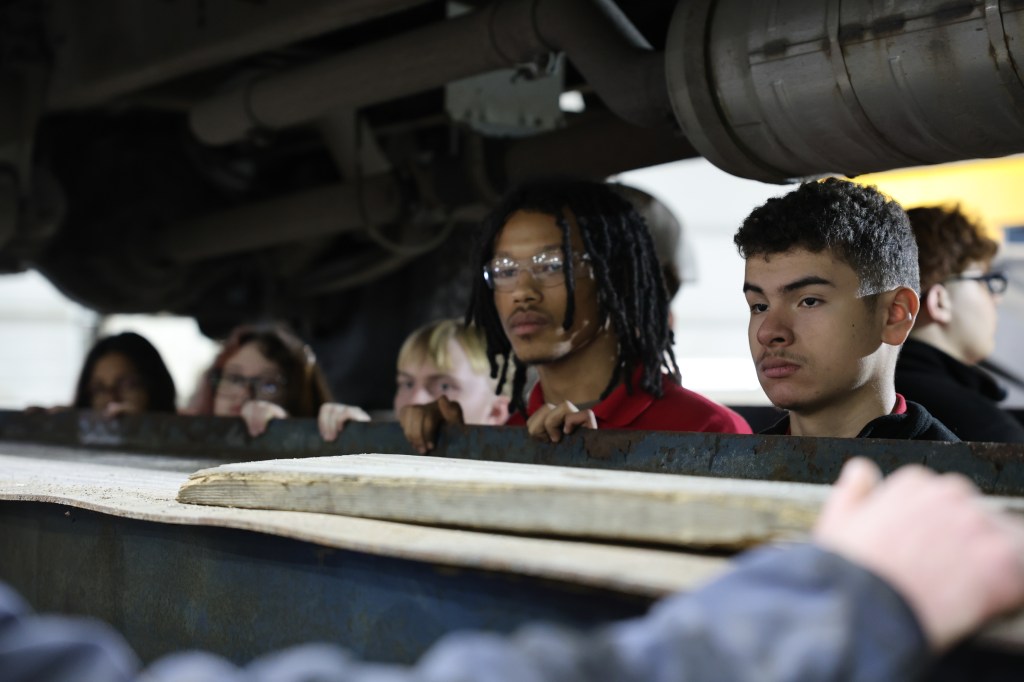
To end February, junior Automotive Tech students from the South Western Career Academy stepped out of their usual lab setting and into the district’s transportation garage for a hands-on learning experience that brought their coursework to life. Instead of working beneath passenger vehicles in lab lifts, students found themselves standing under full-size school buses, examining the powerful machines that safely transport thousands of students each day.
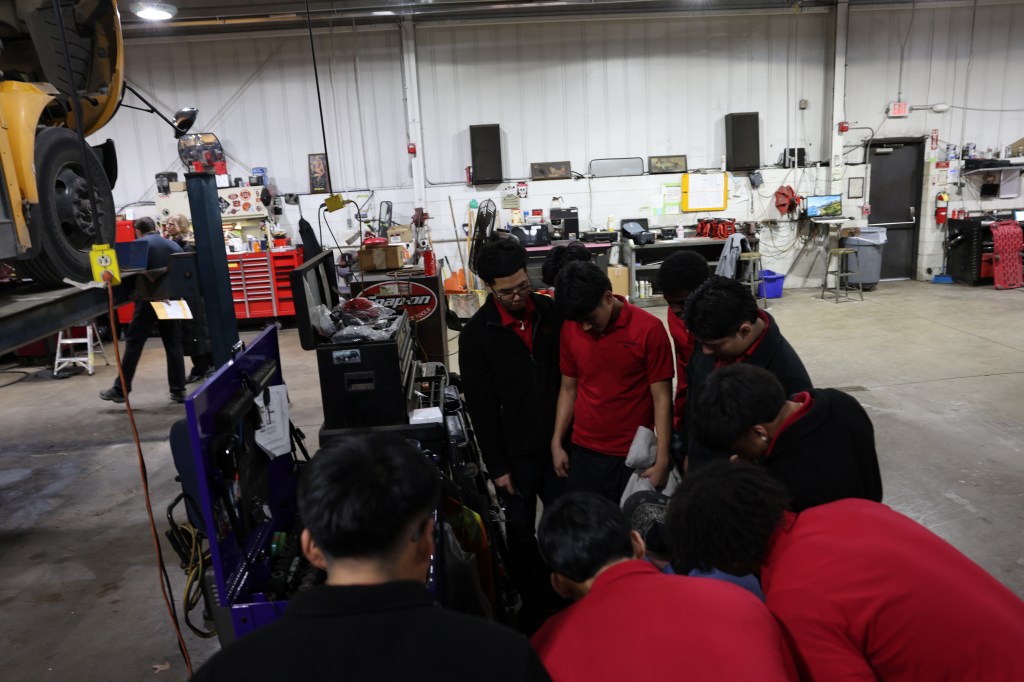
It is not often that students have the opportunity to walk through a working bus garage and observe the inner workings of a district fleet. For these juniors, the visit offered a rare behind-the-scenes look at the scale, complexity and responsibility involved in maintaining school transportation vehicles.
Transportation mechanics guided students through key maintenance procedures, explained how buses are inspected, diagnosed, and repaired. They demonstrated routine safety checks, discussed preventative maintenance schedules and walked students through components such as air brake systems and emissions controls.
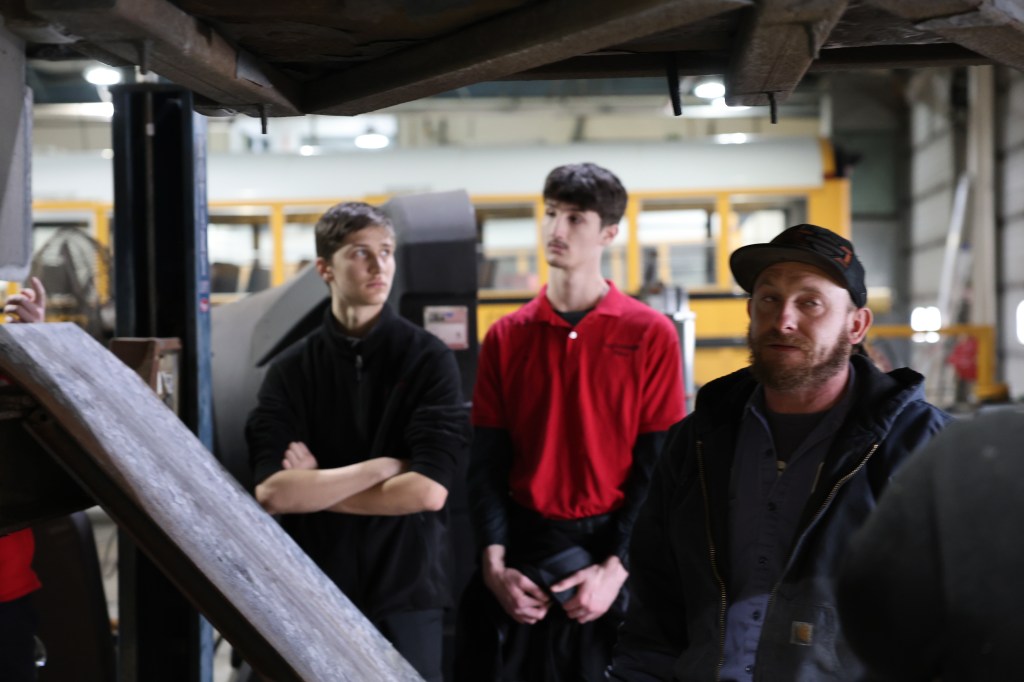
“It was actually quite exciting to have them over,” said Robert Hartley, a SWCS transportation mechanic with 25 years in the district garage. “A lot of the kids were very engaging and asked a lot of questions.”
Some of those questions went well beyond the basics.
“Some of them surprised me,” Hartley said. “They were asking about the difference between air brake systems on buses and hydraulic systems like you see on most cars.”
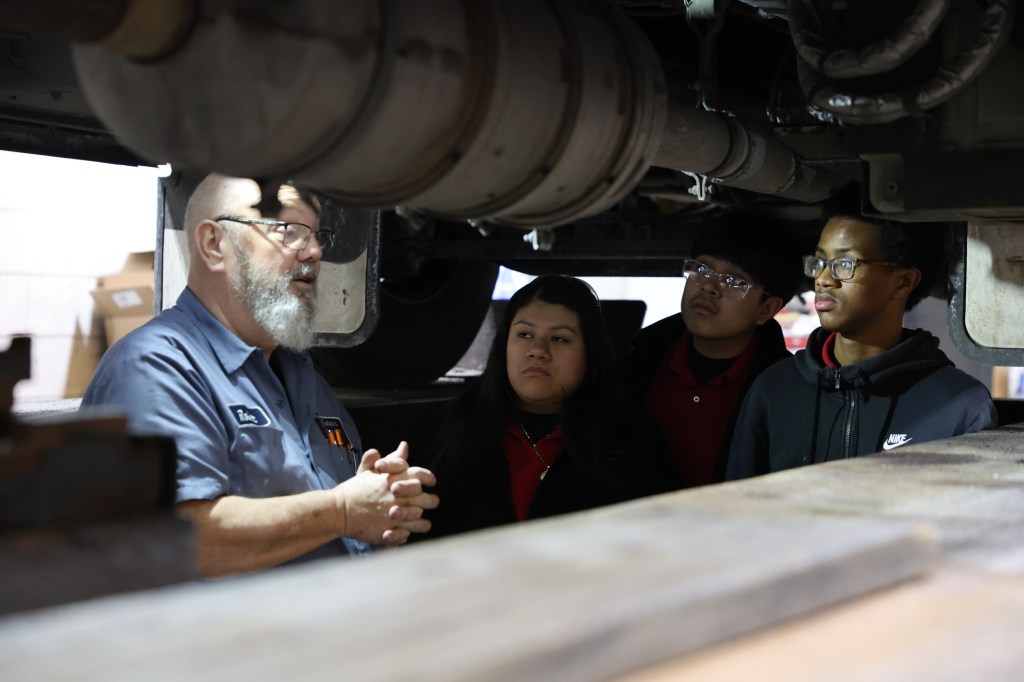
Students also asked about exhaust systems, emissions requirements and specialized equipment used in the garage.
“They were asking about the EPA requirements with the newer buses that have DPF systems,” he said. “They also asked about tools and what the requirements are for those.”
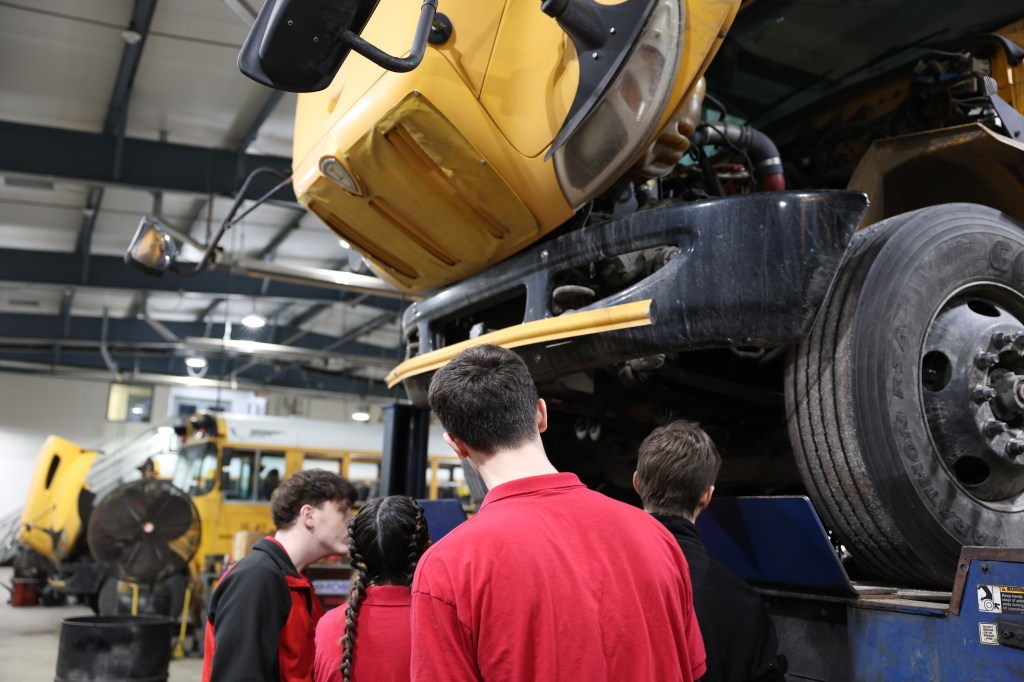
The visit helped students connect familiar concepts from the classroom to much larger vehicles. In the Auto Tech lab, students typically work on passenger cars. Seeing those same systems on buses offered a new perspective.
“Buses are a lot like regular cars, but everything is bigger,” said Bona, a SWCA junior from Central Crossing High School. “That can make some things easier to work on, but it also means the parts are heavier.”
For Bona and his classmates, the scale of the equipment quickly became clear when mechanics showed them common maintenance tasks.
“Just to get to the brakes, you have to take two wheels off, and the wheels are heavy,” he said. “Even picking up the brake drum itself, it was heavy.”
Despite the challenges, the experience gave students a glimpse of work environments they might pursue after graduation.
“It was pretty cool,” Bona said. “I got exposed to things I don’t usually get to see.”
He said conversations with classmates continued even after returning to school.
“After the visit, we talked about what a good opportunity it could be,” he said. “We were thinking about how that kind of job might fit us in the future.”
For Irene Campos, a junior from Westland High School, the visit broadened her understanding of how vehicle systems can vary across industries.
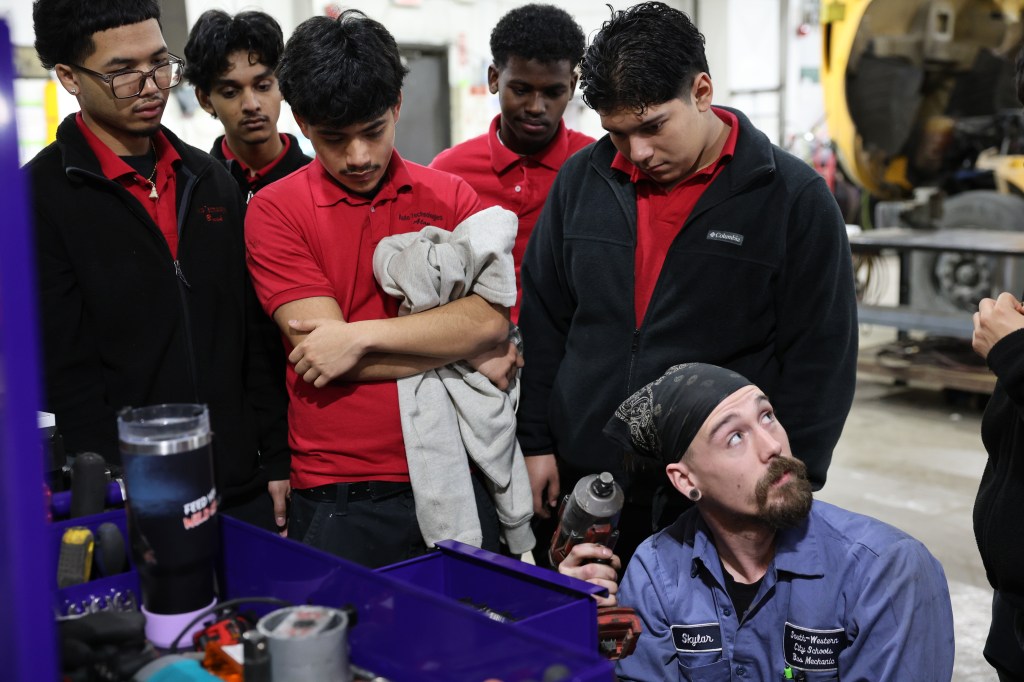
“It seems interesting to me, learning how things work and how they’re different,” Campos said.
While she is still exploring career options, the experience gave her a new appreciation for the work performed by transportation mechanics.
“It helped me see how difficult the job really is,” she said. “The parts are really heavy, so you shouldn’t try to be a hero if you can’t lift something. You could get injured.”
Experiences like this highlight the strong partnership between the South Western Career Academy and district departments. By opening its transportation garage to students, South Western City Schools provides opportunities for learners to see how their classroom training connects to real equipment, real responsibilities and real careers.
They may ride the bus less frequently than they once did, but after seeing what it takes to maintain a fleet of buses safely, they are unlikely to look at one the same way again.
 SW Insider